
The board game dialog'
A game to discover others
Trues stories, shared emotions, a dialog that makes your relationships thrive
The dialog’ experience
Share with pleasure
dialog’ is a board game to experience true empathy and understand your and others’ emotions.
It creates something few experiences can: genuine listening, attention to others, the joy of being together and sharing, while exploring emotions.
Each player tells a story from their own life — light-hearted or more personal, as they wish — with a hidden emotion that the other players try to guess, first individually and then together. Often with surprise, they discover just how differently the same story can be perceived.
How we play
Three tempos to build dialog'
A true story is the starting point to experience listening and mutual understanding.
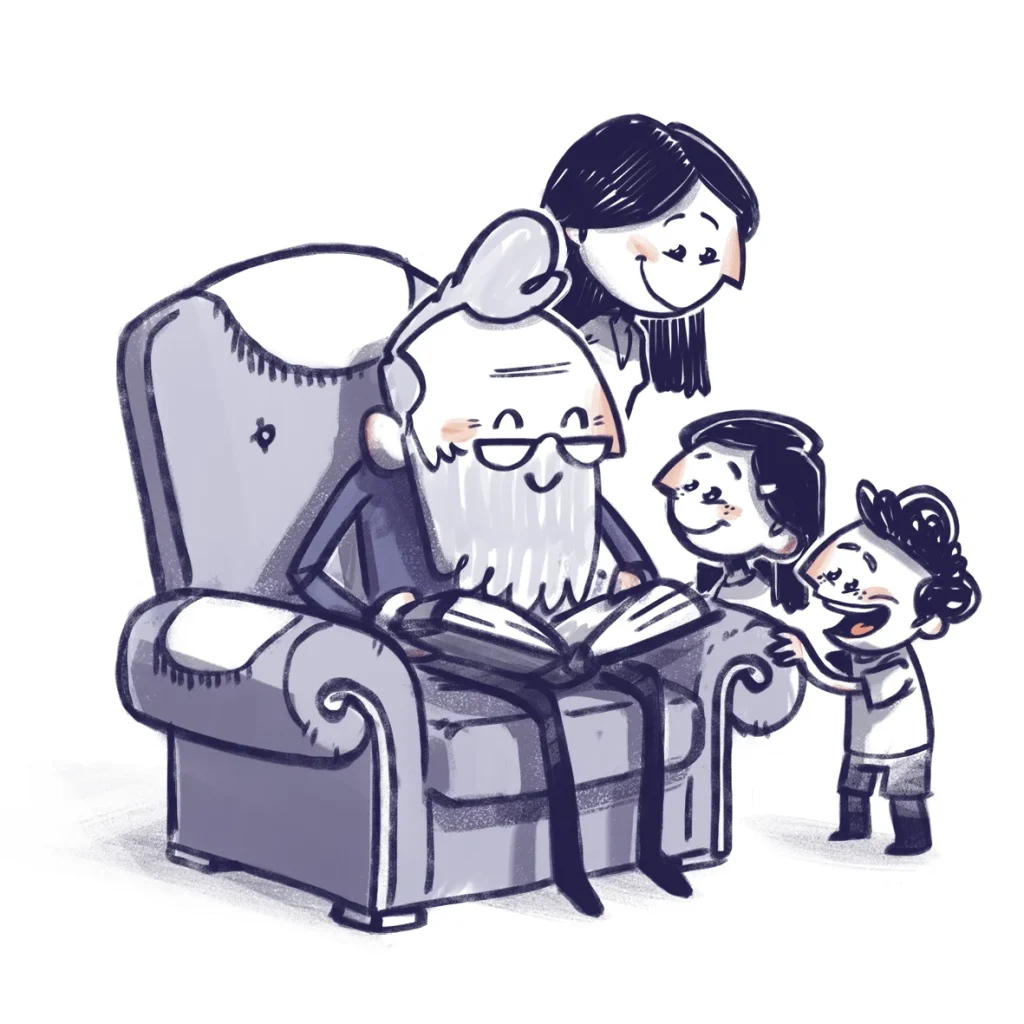
1. Tell
The story-teller picks an emotion card and an inspiration card then tells a real story while keeping the emotion hidden.
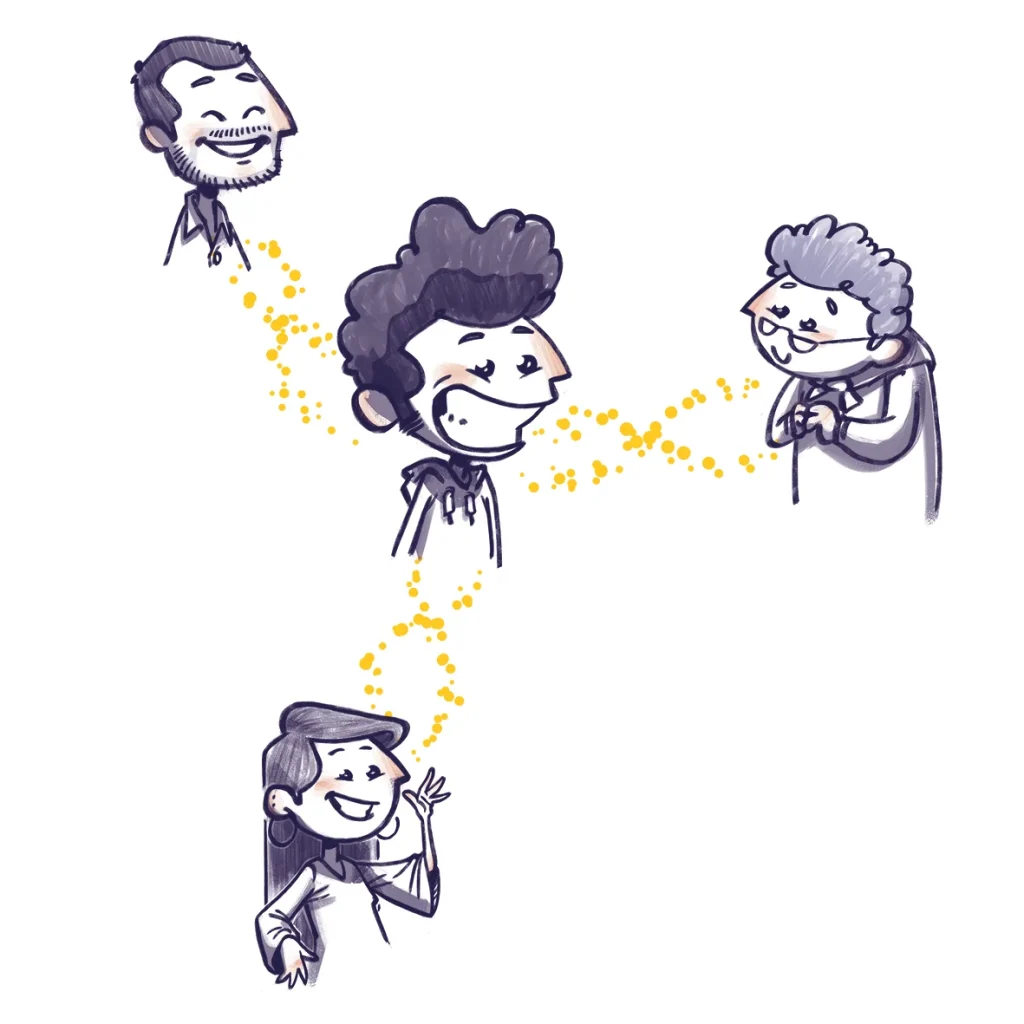
2. Guess
The players listen with full attention and try to guess individually the emotion felt by the storyteller.
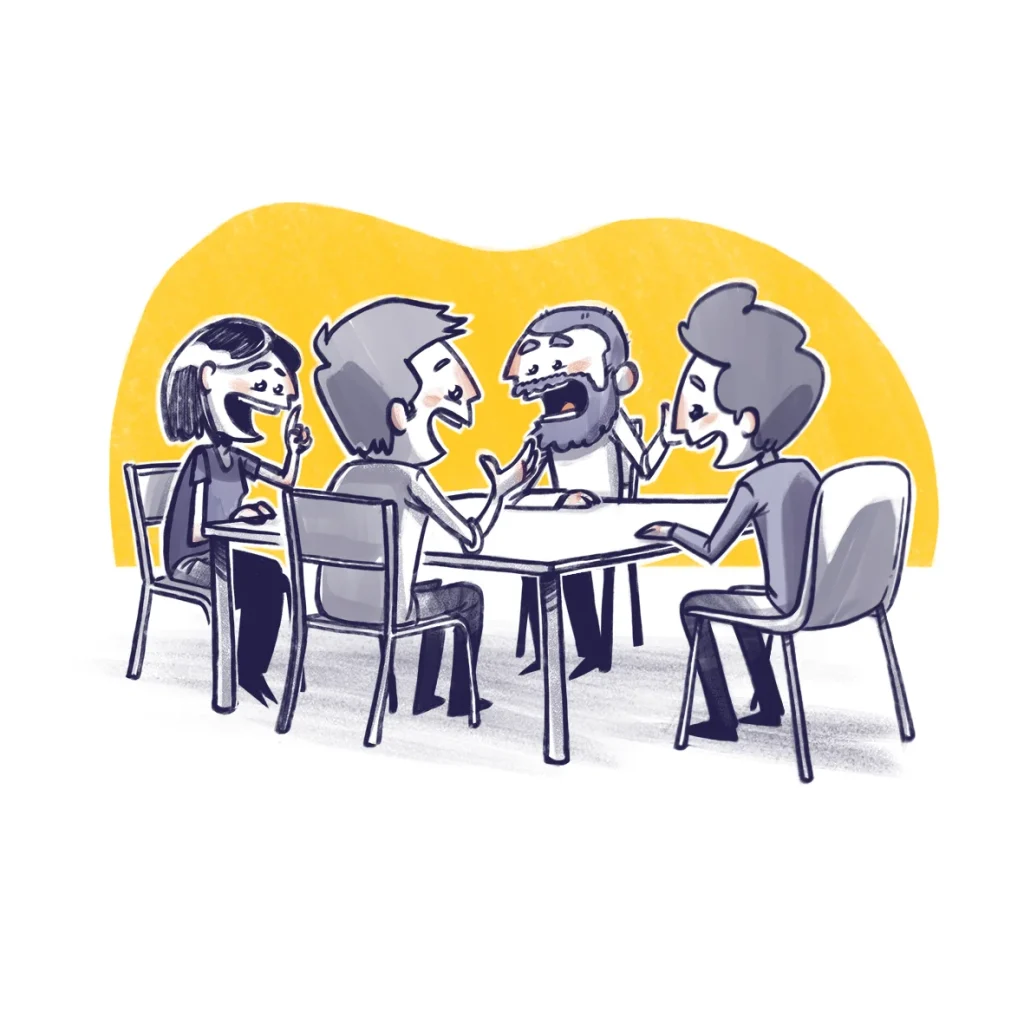
3. Dialog
The players ask open-ended questions, then enter a dialog’ to build an agreement on one emotion that they think is behind the story.
The frame of each round
For each round, players take on two roles — one Storyteller and 2 to 5 Players — using Emotion Cards, Inspiration Cards and Anti-Dialogue Tokens, playfully handed out whenever someone interrupts, judges or falls into other anti-dialogue habits.
This simple framework, both playful and structured, gives everyone the freedom and psychological safety to express themselves openly.
Playing the game
3 to 6 players
around the board
6-99 years old
with 6 emotions for the younger ones
≈ 40 min
with 4 players
Ready to go
no preparation, just play






Emotions at the heart of the game
18 emotions, 1000 ways to share.
Each emotion opens a new way of understanding each other and opening up.
Learn while playing
7 relational competences developed in the game
Beyond the fun of playing, dialog’ helps develop seven essential competences — that can be learned, just like reading or counting — and that foster mutual trust and the joy of being together.
Tell
Dare to speak, be yourself, genuine. Tell a story that is true without the fear of being judged.
Listen
Listen with attention and witout judgment. Take the time to listen before answering.
Discern
Understand the nuance and accept the difference. Diescern fact from interpretation, cause from consequence.
Share
Discover and understand emotions émotions, yours and that of others and learn how to name each one of them.
Cooperate
Build together a solution, a response that possibly no other player has found alone.
Respect
Recognize and accept the others’ opinion ou perspective including — and above all — when you disagree.
Understand
Aim for unanimous agreement and include everyone to enrich perspective and mutual understanding.
Freedom within a frame
dialog' adapts to all people and places to build trust
Behind the joy of playing, dialog’ builds mutual trust and the joy of being together, wherever we interact: at school, with family and friends, in communities or at work — always as a team.
At school
From elemetary to highschool
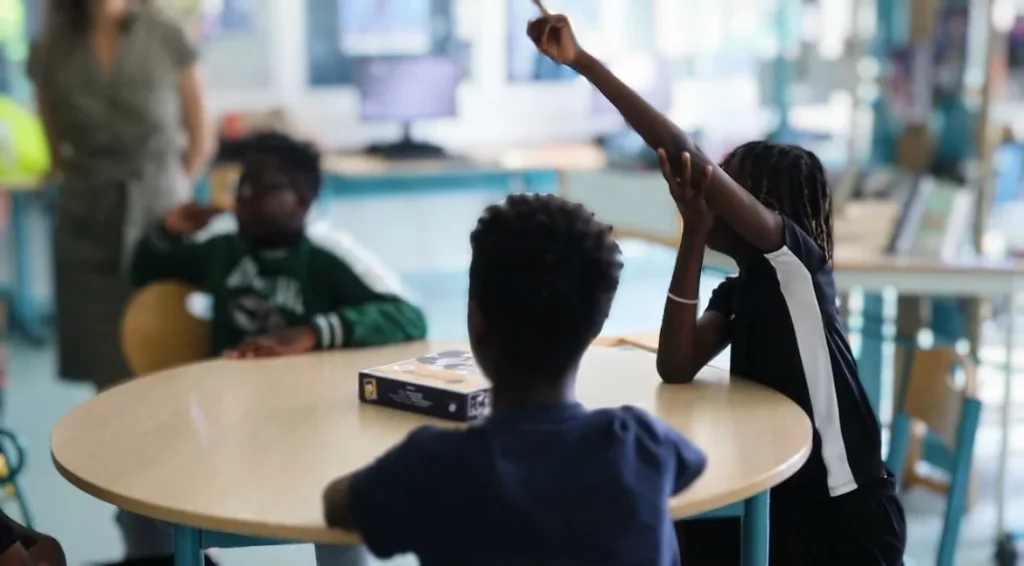
During or outside classtime, in support sessions, the framing helps open up and talk with specific rules. The professor or educator can supervise and support and sees who needs help, who listens, who makes progress.
« I’ve seen shy students open up, tensions get resolved on their own, simply. dialog’ is a trigger to build respectful interactions and true listening in class. »
— Pilot highschool professor
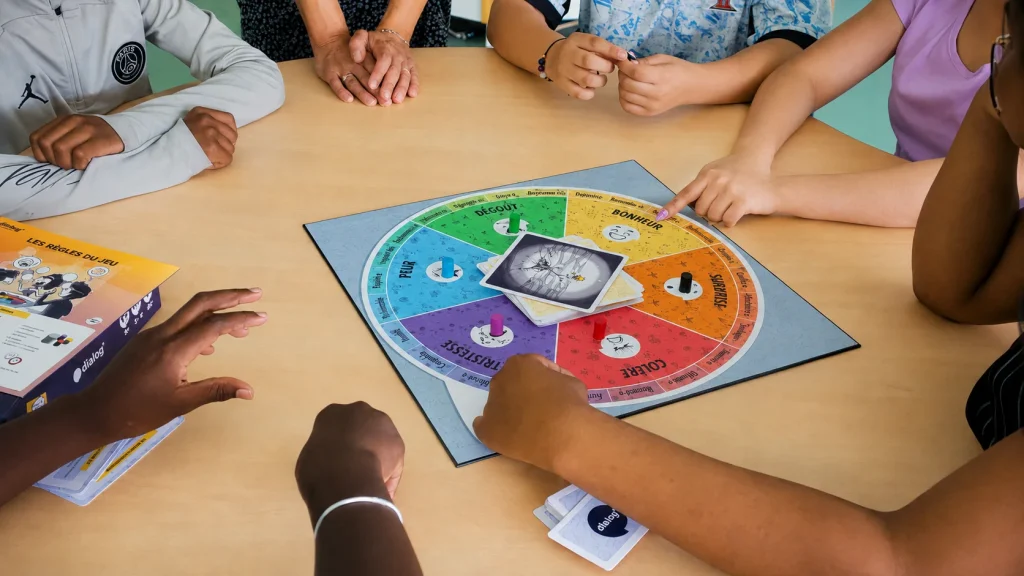
Entre proches
En famille ou entre amis
Autour de la table, dialog’ donne à chacun son temps de parole, y compris aux plus discrets. Les règles créent un cadre de confiance qui permet de découvrir ses proches autrement.
« Ma fille, qui parle peu, s’est mise à parler. Les règles du jeu ont permis qu’elle se sente en confiance. »
— Claire, maman d’une jeune ado très réservée
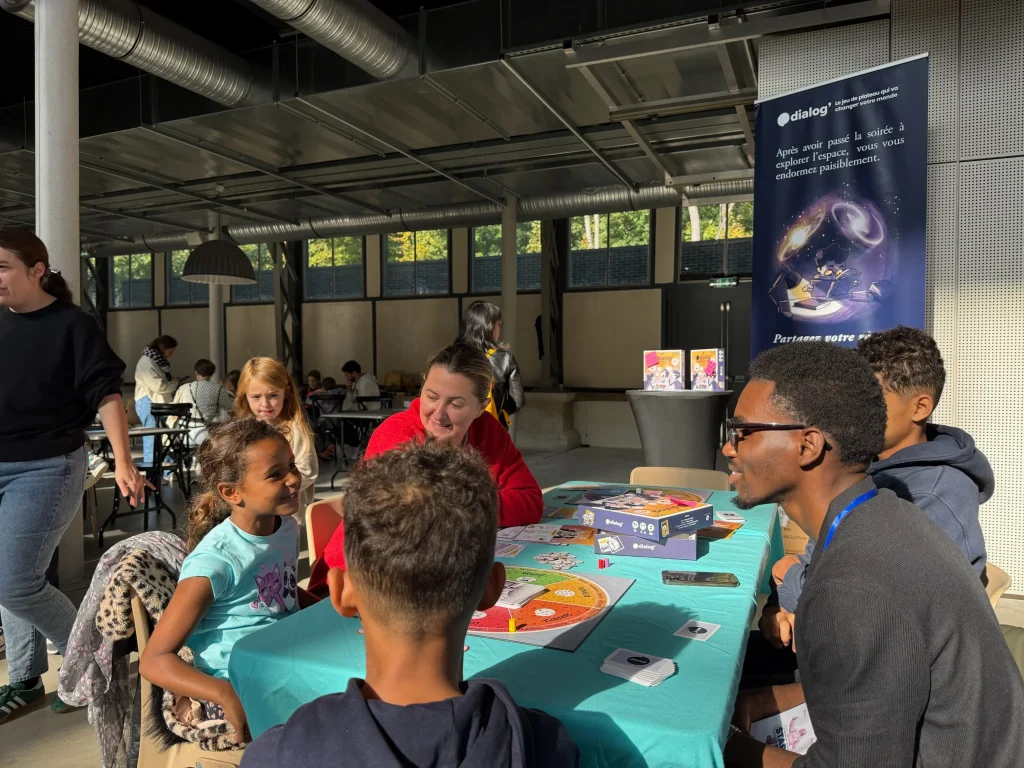
En collectivité
Créer du lien, simplement
En centre de loisirs, maison de jeunes, hôpital de jour ou lors d’un événement public, dialog’ permet à des personnes qui se connaissent peu — ou pas — de créer rapidement du lien dans un cadre naturel.
« dialog’ est le premier outil éducatif qui rend la science des émotions accessible au quotidien. »
— Aude Lechère, psychologue clinicienne
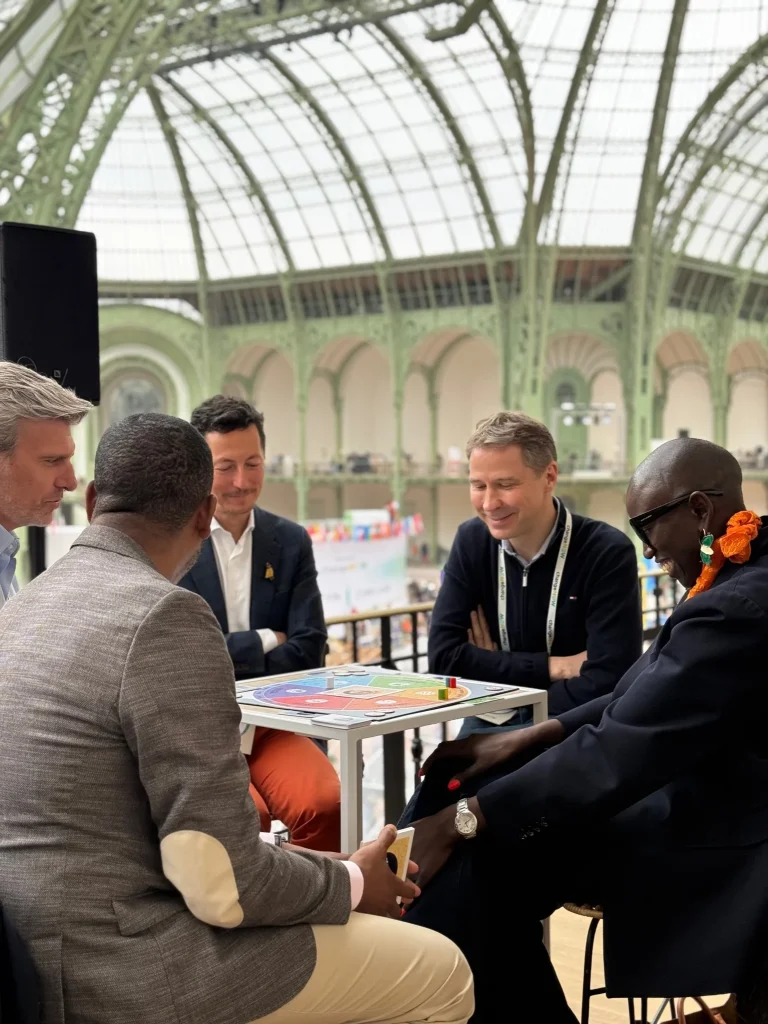
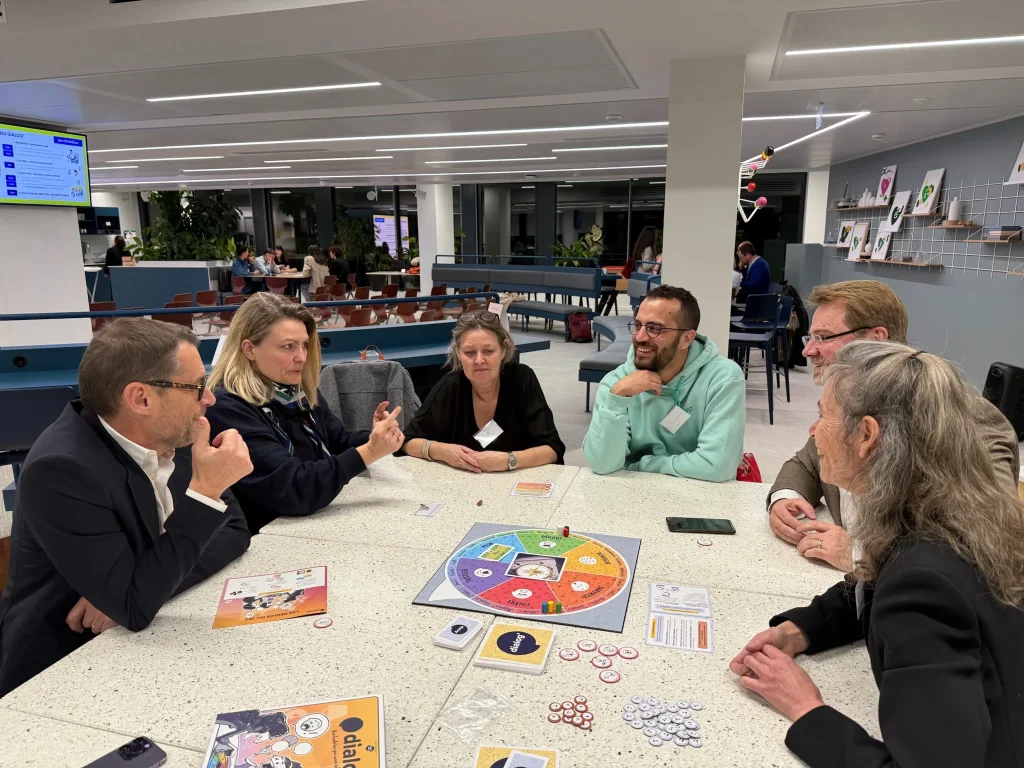
En entreprise
Équipes et séminaires
En comité de direction, en séminaire ou lors de l’intégration d’une nouvelle équipe, dialog’ va bien au-delà de l’icebreaker : il installe rapidement une qualité d’écoute et de lien qui reste après la partie.
« On a vraiment écouté en profondeur, appris à poser des questions ouvertes. On a ri, et parfois été très émus. »
— Laure, DRH d’une entreprise de CRM
Words from experience
Dialogue seen by those who live it
18 testimonies from using dialog’
Students, teachers, parents, school leaders, local communities, companies, and research partners share how dialog’ and the Savoir-Relier methodology are transforming the way they connect, listen and learn from one another.
Teachers
« dialog’ gave me a simple, practical way to defuse tensions between students when I used to struggle to find the right words. Within just a few weeks, I saw quiet children find their voice and speak with confidence, while more disruptive students began to slow down, listen and engage differently with others.»
— Enseignante de CE1
Organizations
« dialog’ helped us connect differently as a leadership team. The playful setting made it easier to put egos aside and have more open, genuine conversations. We came away with a deeper understanding of our team dynamics — and of the powerful role emotions play in how we relate, communicate and work together.»
— Members of executive team
students
« Playing dialog’ taught me how to say I’m sad without getting angry. And now, when my friends get upset, I understand them better. »
— L., 8 y.o., 3rd grader.
PARENTS
« What struck me most was seeing my daughter naturally use some of the habits she had picked up through the game to work through a conflict with a friend — without anyone prompting her. I can really see that the learning stays with her and becomes part of how she relates to others, well beyond the game itself. »
— Parent of a middle highschool student
professors
« We had a wonderful session last Wednesday to prepare for our end-of-term class review, with the school’s student support coordinator and myself simply observing.
The whole class took part: 30 students working in six groups of four, which I had put together in advance to ensure a good balance of personalities. The student representatives, their deputies and two other students acted as facilitators, making sure everyone had a chance to speak and taking notes for the upcoming review.
The atmosphere was calm and focused, and the student representatives came away with a wealth of material for their summary — a rich and nuanced picture of how their classmates were feeling. »
— Professor of French highschool
head of school
« We were looking for a way to address bullying that would actively involve students, rather than simply telling them what to do or how to behave. dialog’ gave us exactly that: a structured, engaging way for students to speak, listen and reflect together. Our teaching team adopted the approach remarkably quickly — which is rare when introducing a new program in a school. »
— Elementary school director
student
« It’s a really fun game to play with family or friends. You get to hear little stories about each other that you might never have heard before, and understand how someone else felt — even about an argument you had in the past. It can help you see things differently and clear up misunderstandings.
It also helps you get better at expressing yourself, listening to others and explaining what you mean. I even think it’s helped me become a more confident speaker — and I take public speaking classes! ☺»
— A., 15, 11th grader
research institution
« What makes this partnership so valuable is the opportunity to measure objectively what we had intuitively sensed: how the quality of relationships can shape learning. dialog’ creates a unique research setting where we can observe how students, listen, express emotions, interact and build trust — and explore how these relational dynamics connect with engagement and learning on all fronts. It offers a rare bridge between educational practice and scientific research. »
— Researcher, scientific partner of ISR-dialog’ measure
organizations
« We introduced dialog’ during one of our team offsites, and the response exceeded our expectations. As an HR leader, what struck me most was seeing colleagues who rarely had meaningful conversations with one another open up about topics that really mattered, in a setting where they felt safe to do so.
Afterwards, we noticed a real shift in the team: people listened more closely, spoke more openly and approached difficult conversations with greater trust. dialog’ goes beyond traditional team-building — the experience carries over into the way people work together every day. »
— HR Director, company
PARENTS
« One evening, I tried dialog’ with my four children, aged 5 to 14, and my partner. We loved it — and have played it many times since.
It’s a fun and powerful way to learn to really listen to one another, name emotions, tell stories and ask questions. Each child gets their own moment to speak, be heard and discover how others feel.
Playful, meaningful and great for all ages — a must-have for families! »
— Parent of 4 young children
teachers
« When I sat down with the students, the conversations became much more personal. One student opened up about being bullied several years earlier and how deeply it had affected him.
I began sharing some of my own classroom experiences too. I hadn’t planned to, but something shifted: the students opened up more, listened differently and felt more comfortable sharing what really mattered to them. They saw me not just as their teacher, but as someone who was also there to listen and take part in the conversation. It created a real sense of trust between us. »
— French Highschool professor of History and Geography
Training
« What always surprises me is how quickly people start to open up — whether I’m working with students, teachers, families or teams in the workplace. At first, some are a little hesitant, but once they realise they can speak without being interrupted or judged, the conversation changes.
By the end, they often tell me they’re leaving with something they can actually use — a different way of listening, asking questions or approaching conversations in their everyday lives. »
— Savoir-Relier trainer
student
« We played dialog’ in class when there was quite a lot of tension between us, and it really changed the atmosphere. Usually, people are quick to make fun of each other, but this time we actually took the time to listen.
I understood better why emotions matter and why my friends sometimes react so strongly. Making the effort to talk — and really listen to each other — just feels good. »
— I., 19 ans, Junior college student (French BTS)
PARENTS
« I knew the story my son shared, but I had never realised how deeply the experience had affected him. »
— Parent ol elementary schoolboy
teachers
« What I really value is that dialog’ doesn’t lecture students about how they should behave. They practice relational competences by actually experiencing them and their behaviors change. I can see the difference in the classroom: students listen more, tensions ease, and the group becomes calmer and more connected. »
— Teacher, 4-5th graders
organizations
« There’s no automatic ‘magic’ to the game. What dialog’ does is create the conditions for genuine dialogue — and when those conditions are there, connections begin to form, simply but deeply.
After this inter-school session, bringing together primary, middle and high school students, we’re planning to open future sessions to an even wider community: older residents, library staff and healthcare workers. The aim is to create connections across generations and strengthen the sense of community across the city. »
— RLocal government leader
head of school
« What convinced me was the scientific rigour behind the project, with a robust impact assessment protocol and researchers directly involved. But what matters most is what it changes across the school: how students listen and relate to one another, how teachers engage with their classes, and how we build a more positive environment for learning together. This isn’t just another educational tool — it’s a long-term approach that engages the whole school community. »
— Highschool Principal
Academic INSTITUTION
« What makes this project distinctive is the way it brings together a proven field methodology, an accessible game that draws people in through storytelling, emotional discovery and active participation, and rigorous scientific research. It’s this combination that gives the approach both its credibility and its potential to scale across the education system. »
— Inspector General, French Ministry of Education
Learn more
Le jeu ouvre la porte.
Les ressources font vivre le
dialogue
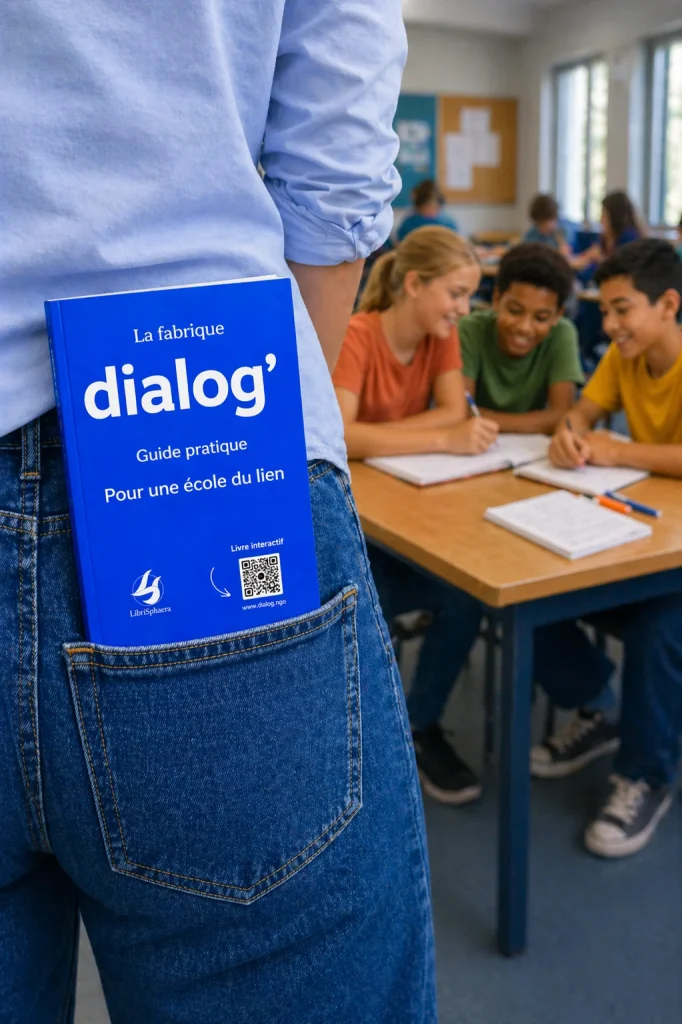
The practical guide
La Fabrique dialog'
La Fabrique dialog’, pour une École du Lien (LibriSphaera, June 2026) turns the dialog’ experience into everyday practice. This hands-on guide brings the seven relationship skills to life with activities you can use straight away, downloadable resources, video stories from primary, middle and high schools as well as adult settings, and QR codes leading to interactive content.
Whether you’re a teacher, school leader, parent, educator or facilitator, the book gives you practical ways to spark meaningful conversations, strengthen relationships and make dialogue part of everyday life.
dialog' Training
You don’t need any training to play dialog’. But facilitating a session in a classroom, an organisation or a team requires specific skills: creating a safe space, involving everyone, encouraging genuine listening and navigating sensitive moments. The dialog’ training pathway grows with your practice: learn to facilitate your first sessions, deepen your skills to support groups and other facilitators, then progress towards becoming a dialog’ Master — an expert in the Savoir-Relier approach and dialog’ methodology.
65+ certified Animators
dialog' Animator
A self-paced course to explore the dialog’ game in depth — its principles, rules, relationship skills and facilitation dynamics — and gain the practical tools and confidence to facilitate your own dialog’ sessions.
27+ certified Masters
dialog' Master
Learn to design and lead a complete dialog’-based educational program: define learning objectives, build a tailored pathway for your audience, facilitate more complex group dynamics, assess the program’s impact on relationship skills, engagement and the learning environment.
8+ certified Experts
dialog' Expert
An advanced program for experienced dialog’ facilitators. By the end of the training, you’ll be able to build a complete dialog’ program, train and support facilitators, lead sessions with complex groups, adapt the methodology to different contexts, set up impact measurement, and scale dialog’ across a school, team or organization.
The next story is yours
Ready to play ?
1 game, 3 tempos, 40 minutes : that’s all you need to change the quality of your relationships. Every game supports a non-profit organization, dialog’.